
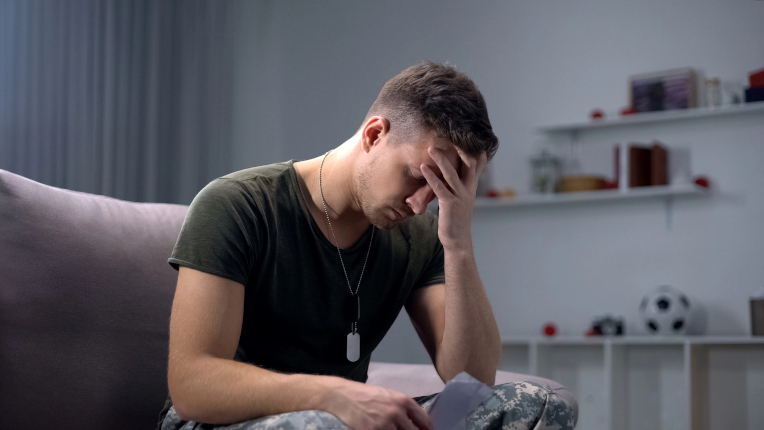
Military Divorce and Child Custody in Florida
When a military marriage starts coming apart, the legal issues are only part of the problem.
A lot of times, the harder part is everything happening around it. You may be coming off deployment. You may be stationed somewhere other than where your family lives. You may be trying to keep your head on straight while also figuring out what happens with your kids, your time with them, and whether the life you thought you were coming back to is still there.
That is a hard place to be.
And when children are involved, the question gets more urgent. It is no longer just about the marriage. It is about how to protect your relationship with your kids and how to make decisions that will still work in real life, not just on paper.
If you are dealing with military divorce and child custody in Florida, especially in Tampa, Carrollwood, or Town ’N’ Country, it helps to understand a few basic things early. The good news is that military service does not take away your rights as a parent. But it does add complications that need to be handled carefully.
Child custody in Florida starts with the child, not the parents’ anger
In Florida, courts focus on the best interests of the child. That is the standard. Not which parent is more offended. Not which spouse caused the marriage to fall apart. Not who has the better story for Thanksgiving.
When people talk about “custody,” Florida law usually talks more in terms of parenting plans and time-sharing. The court is looking at how decisions will be made, when the child will spend time with each parent, and what arrangement is most likely to support the child’s stability and well-being.
That matters in every divorce, but it matters even more in a military divorce. Service members often deal with deployments, training schedules, temporary duty assignments, relocation, and other demands that civilian parents do not have in the same way.
None of that means a military parent is at a disadvantage by definition. It does mean the parenting plan needs to be realistic.
If you are still trying to understand the broader divorce process, it may help to start with the firm’s divorce page and the article on what to do before you file for divorce in Florida.
Military service does not make you a lesser parent
This is one of the biggest fears service members carry into these cases, and it is understandable.
A father or mother in the military may worry that long hours, deployments, or time away will automatically be used against them. They may assume the court will see the civilian parent as the more stable choice just because that parent has been physically present more often.
That is not how this is supposed to work.
Military service, by itself, does not make someone a bad parent or an unimportant parent. Courts understand that service brings special obligations. The question is not whether military life is inconvenient. The question is how the child’s needs can be met in a way that protects the parent-child relationship and gives the child as much consistency as possible.
That means a service member’s parenting role should be looked at honestly and fairly. A deployment does not erase the bond with your child. It does not mean you stop mattering. And it does not mean the other parent gets to rewrite the family story while you are gone.
Parenting plans matter a lot in military custody cases
In a Florida military divorce, the parenting plan does a lot of heavy lifting.
A vague parenting plan is a problem in almost any case. In a military case, it is worse. If your schedule can change, if deployment is possible, or if distance is part of the picture, the plan needs to be specific enough to handle that reality.
That may include:
- regular time-sharing when the service member is available
- holiday schedules
- school breaks
- transportation responsibilities
- how communication with the child will happen during absences
- what happens if one parent is deployed
- how missed time may be made up
- how notice will be given for major schedule changes
The more realistic the plan is, the better chance it has of holding together when life stops cooperating.
This is one reason the existing article on military parenting plans in Florida is so important. It goes hand in hand with custody issues and should be part of the conversation from the start.
Deployment creates special custody concerns, but not automatic losses
Deployment changes things. Nobody should pretend otherwise.
If a parent is going overseas, leaving the state, or becoming unavailable for a period of time, the family may need temporary adjustments. But temporary changes are not supposed to become a back door for permanently cutting a parent out of the child’s life.
That is an important point.
A deployment may justify temporary changes in time-sharing or logistics. It should not automatically be treated as proof that the deployed parent is less committed, less capable, or less important.
The law can get technical here, and the facts matter a lot. But from a practical standpoint, parents in military cases should think ahead. If deployment is a possibility, the parenting plan should address that directly instead of leaving everyone to improvise in the middle of a crisis.
That kind of planning is not pessimistic. It is responsible.
Distance and relocation can make everything more complicated
A lot of military families are not dealing with one neighborhood, one school district, and one stable set of routines. They may already be juggling distance, base assignments, housing transitions, or the possibility of moving again.
That can make child custody disputes more stressful.
When parents are not living close together, questions about transportation, school schedules, exchanges, holidays, and summer break become much more significant. A parenting schedule that looks fair on paper may be completely unrealistic once flights, long drives, work obligations, or military duties enter the picture.
This is where grounded planning matters more than slogans.
A court is not helped by abstract promises that both parents will “work it out.” The plan needs to be clear enough to function under pressure. That is especially true when one parent is in the military and future changes are more likely than in a typical civilian case.
Communication with the children still matters when you are away
One of the hardest parts of a military custody case is the fear of being pushed to the edges of your child’s daily life.
That fear is real.
If you are away because of duty, it is easy to worry that you are missing too much, that the other parent will become the default center of gravity, or that your connection with the child will slowly weaken. That is one reason parenting plans should address communication, not just physical time-sharing.
Phone calls, video calls, school updates, activity information, and other regular contact can matter a great deal. Not because it perfectly replaces being there in person. It does not. But because it helps preserve the relationship and reminds the child that distance is not abandonment.
That matters to the parent, and it matters to the child.
Mediation can be useful in military custody cases
Military families often benefit from solutions that are practical, detailed, and less driven by escalation. That is one reason mediation can be useful in some military divorce and custody cases.
If both parents are able to have a real discussion, mediation may help them build a parenting plan that accounts for military service without turning every issue into a fight. It can also help people think through deployment concerns, communication, temporary adjustments, and long-term expectations in a more focused way.
That said, mediation is not about pretending everything is friendly. It is about getting specific and workable.
If you want a better sense of how that process works, the article on the Florida divorce mediation process is a good next read, and divorce mediation myths can help clear out some of the bad assumptions people bring into the room.
The court is looking for stability, but stability has to be defined honestly
“Stability” is one of those words that can quietly do a lot of damage if nobody slows down and defines it.
In a military custody case, one parent may try to frame stability in a way that simply means “the child stays with me because my schedule is easier.” Sometimes that is a fair concern. Sometimes it is a self-serving one.
The real question is broader than that.
Stability includes routine, yes. But it also includes continuity of love, continuity of connection, continuity of parental involvement, and a plan that helps the child maintain a meaningful relationship with both parents whenever possible.
A military parent may not have a simple nine-to-five schedule. That does not mean the child is better off with less of that parent in their life.
Custody fights can become proxy wars for marital pain
This is another hard truth in military divorce cases.
Sometimes the custody fight is partly about the child. Sometimes it is also carrying a lot of the anger, betrayal, and hurt from the marriage itself. When that happens, the service member may feel like they are being punished through the children, or the civilian spouse may feel like they carried the burden alone and should now have more control.
Those feelings may be understandable. But if they drive the case, everyone gets dragged into a worse place.
Children should not become the battlefield where adults settle the emotional score.
That is one reason it is so important to approach these cases with a clear head and a practical plan. The more the case can focus on what the child actually needs, the better chance there is of getting through it without doing more damage than necessary.
If conflict around the child becomes especially intense, it may also help to understand the role of a Guardian ad Litem in some Florida custody cases.
If you are a service member, do not wait too long to get advice
A lot of military parents wait too long to get legal advice because they are trying to hold things together, hoping the situation will calm down, or assuming there will be time to deal with it later.
Sometimes there is not.
If you are facing divorce and worried about your children, it helps to talk through the issue early. That does not mean you need to rush into a courtroom. It means you need to understand where you stand, what the likely issues are, and what steps may help protect your relationship with your children before the case starts taking shape without you.
That is especially true if there is already tension around time-sharing, relocation, communication, or the possibility of deployment.
Final thoughts
Military divorce and child custody in Florida can be hard in ways that civilian families do not always fully understand.
You may be dealing with distance, duty, unpredictable schedules, or the shock of coming home to a marriage that is no longer where you thought it was. On top of that, you are trying to protect your role as a parent and make sure your child does not get lost in the middle of adult problems.
That is a lot.
The good news is that military service does not take away your place in your child’s life. But these cases do need careful planning, honest communication, and a parenting approach that takes military realities seriously instead of brushing past them.
If you are dealing with military divorce and child custody in Florida, especially in the Tampa area, it helps to get clear about your options early. That includes understanding parenting plans, time-sharing, deployment issues, and whether mediation may help create a more workable path.
If you need to talk through the situation, you can contact the office to discuss the next step.