
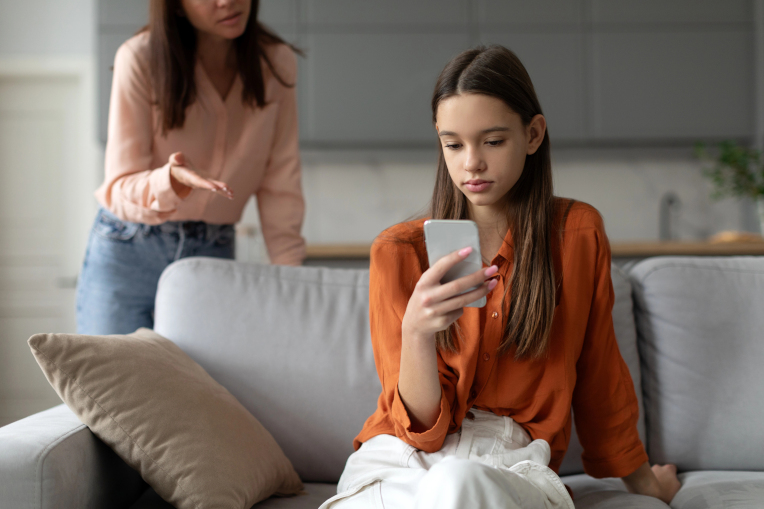
Screen Time After Separation: What Co-Parents Really Need to Watch
If you are co-parenting in Tampa, Carrollwood, or anywhere in Hillsborough County, there is a good chance you have already had an argument about screen time. If not, you may be able to see one gathering on the horizon.
One parent says the child is always on a phone. The other says that is exaggerated. One house has stricter rules, while the other is more relaxed. One parent hears “TikTok” and sees the fall of Rome. The other is thinking that half the adults they know spend their evenings staring at Facebook, YouTube, cable news, or ESPN as though they are studying for an exam.
That is part of what makes screen time such a loaded subject after separation. The disagreement is rarely only about the device. It is also about parenting styles, household rules, guilt, trust, control, and the uncomfortable reality that your former spouse now runs a home you do not control.
The most useful question is not simply, “How many hours is my child spending on a screen?” A better question is, “What is that ‘screen use’ doing to my child’s life?”
Is it affecting sleep, school, mood, health, responsibilities, or relationships? Is the child still able to put the phone down, participate in family life, and act like themselves? That is usually where the real answer lives.
Not All Screen Time Is the Same
Parents often talk about screen time as though every minute spent looking at a device belongs in the same category. It does not.
A child watching basketball highlights, texting friends, following a guitar tutorial, building something in Minecraft, or laughing at a funny dog video is not necessarily having the same experience as a child spending hours consuming bullying, sexualized material, body-image content, outrage, or whatever strange algorithmic swamp the internet has chosen to serve that afternoon.
The amount of time still matters, but the number alone does not tell you enough. A child may spend a fair amount of time on a device and still be sleeping, completing schoolwork, staying active, talking to friends, and participating in family life. Another child may spend less total time on a screen but use it at the worst possible hours, consume harmful content, and become anxious, angry, secretive, or withdrawn afterward.
I have seen parents come into mediation convinced that screen time was the central problem in the family. One parent insists the child is gaming constantly. The other says the concern has been exaggerated for dramatic effect. They spend twenty minutes arguing over whether the proper limit should be two hours or three.
Then, as the conversation continues, the real issue appears. The child has been staying up until one or two in the morning, falling asleep in class, and becoming increasingly irritable. The problem was not really whether the child played a game for two hours or three. The problem was that nobody was protecting sleep.
The screen was simply where the problem showed up first.
That is why parents need to look beyond the timer. Ask what the child was doing, when they were doing it, how they seemed afterward, and what was pushed aside because of it. Those questions usually tell you more than the device report.
Pay Attention to the Content
Sometimes the problem is not the screen itself. It is what is coming through it.
A twelve-year-old watching someone construct a digital castle is not in the same place as a twelve-year-old being fed a steady stream of videos telling them that everyone else is thinner, richer, more attractive, and living a better life. Both activities count as screen time, but they may have very different effects.
Parents do not need to hover over every app like prison guards, but they do need to remain awake to changes in behavior. If your child seems more anxious, angry, insecure, secretive, or wound up after spending time online, that is worth noticing. If they suddenly become touchy about their appearance, constantly check the phone, or act as though the world ends whenever they are disconnected for ten minutes, those are clues too.
None of those signs automatically proves that something terrible is happening. They simply mean it may be time to ask a few calm questions.
- “What have you been watching lately?”
- “Does anything online make you feel worse afterward?”
- “Is somebody bothering you?”
- “What do you like about this app?”
Good parenting still matters more than fancy monitoring software. Sometimes you do not need another app. You need to sit down, ask a sensible question, and listen long enough to get an honest answer.
Sleep Is Often the Best Place to Start
When screen use becomes a real problem, sleep is often one of the first casualties. The child stays up too late, becomes harder to wake in the morning, and moves through the day tired, irritable, and less able to handle ordinary frustration. Schoolwork begins slipping, chores become a fight, and family interaction turns into a series of grunts.
Parents may interpret all of this as disrespect, laziness, or attitude when the child is simply exhausted.
I remember a family that spent months arguing about gaming limits. Each parent was certain the other household was responsible for the problem. Eventually, everyone realized that the game console was not the main issue. The child was taking a phone to bed every night and answering messages long after the lights were out.
Once the phone began charging in the kitchen overnight, much of the conflict improved. Sometimes families argue over the headline while completely missing the footnote.
That is why protecting sleep often does more good than trying to regulate every minute of screen use. A few simple rules may be enough: phones charge outside the bedroom, screens go off thirty to sixty minutes before sleep, and messages can wait until morning.
The adults should also follow the rules often enough to remain believable. Plenty of parents lie in bed staring into a glowing phone like it owes them money. Children may not use the phrase “parental modeling,” but they know hypocrisy when they see it.
Protect the Moments That Matter
A child using a screen is one thing. A child disappearing into a screen while you are trying to talk to them is something else.
That is where much of the real frustration comes from. Dinner becomes quiet. Car rides become silent. A family outing turns into several people standing near one another while mentally living in different places.
For separated parents, that can feel especially painful because time with the child may already feel limited. One father once told me, “I only get my kids every other weekend, and it feels like I spend half of it competing with a phone.”
That sentence stayed with me. He was not really angry about technology. He was trying to reconnect with his children after a difficult divorce, and the phone felt like one more thing standing between them.
Parents do not need to turn the house into a technology monastery. Nobody has to confiscate every device at the front door and communicate by candlelight. It does help, however, to protect a few parts of family life.
Dinner may be phone-free. The first twenty minutes after pickup may be set aside for conversation. Bedtime check-ins can happen without a device in anyone’s hand. A family outing may include a period when everyone is expected to be present.
These boundaries often work better than a giant crackdown because they are tied to a clear purpose. The message is not, “Screens are bad.” The message is, “This moment matters.”
The Rules Do Not Have to Match Perfectly
This is the part many co-parents need to hear: the screen rules in both homes do not have to be identical.
The homes are different because the adults are different. One parent may be stricter. The other may be more relaxed. One household may include younger children with an earlier bedtime, while the other includes teenagers. One parent may unwind with video games after work. The other may scroll social media while watching television. Neither is likely to welcome an announcement from an ex-spouse that their personal habits are now subject to committee approval.
That is real life.
The goal is not to create identical homes. The goal is to avoid extreme rule-whiplash. A child should not move from a home with no limits at all into a home where touching a phone is treated like a parole violation.
Most families do not need a twenty-page technology agreement covering every app, game, website, and device that might be invented over the next five years. They usually need a handful of basic understandings. Content should be age-appropriate. Screens should not interfere with sleep. Homework and important responsibilities come first. There should be some screen-free family time. If either parent notices meaningful changes in mood, school performance, health, secrecy, or withdrawal, both parents agree to take the concern seriously.
Those are realistic guardrails. They give the child some consistency without requiring two adults to run their homes in exactly the same way.
Keep the Conversation Grounded
Parents sometimes enter the screen-time conversation already at a ten.
- “This child is addicted.”
- “They are on the phone every waking minute.”
- “Screens are ruining everything.”
Sometimes the concern is justified. Sometimes it has picked up a little theatrical lighting along the way.
I have heard adults complain that a teenager spends “all day on YouTube” after those same adults spent several hours watching fishing videos, home-renovation clips, political commentary, or the seventh replay of a college football game. Adults tend to excuse their own screen habits because their screens look more respectable. Children are not always impressed by the distinction.
The conversation usually goes better when parents focus on what they can actually observe. Instead of saying, “You are addicted to your phone,” say, “I have noticed you are staying up later,” or, “You seem upset after using that app,” or, “Your homework has not been getting finished.”
The same principle applies between co-parents. “This child is addicted and your house has no rules” will usually produce defensiveness. “I am noticing that she is arriving tired on Mondays, and her teacher says assignments are being missed” creates a conversation about the child.
That distinction matters.
What the Rules Are Really For
The purpose of a screen rule is not to win a contest between parents. It is not to prove that one household is responsible and the other is not. It is not to establish who understands modern parenting better.
The purpose is to help the child function.
Are they sleeping? Are they keeping up in school? Are they taking care of basic responsibilities? Are they still spending time with people in the real world? Can they put the phone down without the household entering a constitutional crisis?
Those questions matter far more than finding a perfect daily number.
I have never seen a family suddenly become healthy because everyone agreed that two hours and fifteen minutes was the magic amount of screen time. I have seen families improve when the adults stopped treating the device as the enemy and started paying attention to what was happening around it.
Technology will keep changing. There will be a new app next year, a new game, a new platform, and a new reason for parents to worry. Childhood has not changed quite as much. Children still need sleep, boundaries, responsibility, movement, and time with people who are actually looking at them.
They still need adults who pay attention without panicking.
For co-parents in Tampa, Carrollwood, and throughout Hillsborough County, the goal is not perfect agreement about every screen rule. It is enough consistency that your child can thrive in both homes.
Not panic. Not perfection. Just common sense, a few clear boundaries, and enough backbone to say, “This device can be part of your life. It does not get to run it.”